
 Prof. Marco Ceccarelli
University of Rome Tor Vergata, Italy
Role and Challenges of Mechanism Design for Intelligent Machines
Abstract: Fundamental is the role of mechanics in system working with intelligence or not to help or substitute humans replicating human-oriented tasks. Intelligent operation is based mainly on intelligent mechanical design when considered properly expected and nonexcepted performance. Challenges in Mechanism Design for intelligent robotic and mechatronic systems can be considered from several viewpoints in technical, social, and financial ones as due to new designs and applications, mainly in service fields. In this lecture main issues are discussed in terms of Innovation aspects coming from Mechanism Design considering that intelligent characters come mainly from a proper design of structure and related functionality. Aspects are presented emphasizing the role of mechanism design in developments of intelligent (robotic) systems as based on the fact that the action in performing tasks, either in coordination or not with human operators, is of mechanical nature due to motion and force transmission goals of the operation. The challenges of mechanism design are presented both in terms of technical solutions and community activity, since each of them depends, impacts, and generates each other. Examples of past and current solutions are presented to show how a mechanism design can be determinant for novel successful achievements and community developments. In particular, the activities at LARM2 in Rome are outlined on topics and systems that can be available for collaborations both in research and joint student formation.
Biography: Prof. Marco Ceccarelli, born in Rome in 1958, is Professor of Mechanics of Machines at the University of Rome Tor Vergata, Italy, where he chairs LARM2: Laboratory of Robot Mechatronics. His research interests cover the subjects of robotics, mechanism design, medical devices, experimental mechanics, and history of mechanical engineering with several published papers in the fields of Robotics and Mechanical Engineering. He has been visiting professor in several universities in the world while he received several honors and awards. He is ASME fellow. Professor Ceccarelli serves on several Journal editorial boards and conference scientific committees. He is editor-in-chief of the MDPI journal Robotics and of the SAGE International Journal on Advanced Robotic Systems for the area on Service Robotics He is editor of the Springer book series on Mechanism and Machine Science (MMS) and History of MMS. He has been the President of IFToMM, the International Federation for the Promotion of MMS in 2008-11 and 2016-19. More information at the web page: LARM2 webpage: https://larm2.ing.uniroma2.it/marco-ceccarelli/
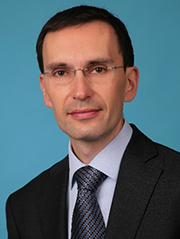 Prof. Andreas Müller
Johannes Kepler University, Institute of Robotics, Linz, Austria
Geometry as a Unifying Language for Modeling Robotic Multibody Systems
Abstract: Mathematics is the language of science, and geometry is the language of kinematics and hence of dynamics. Encoding the inherent kinematics of a multibody system in mathematical models thus requires an appropriate language encoding the geometry of motion. In analytical mechanics, Riemannian geometry has long been employed as a differential-geometric framework for modelling holonomic dynamical systems. Non-holonomic systems and systems subjected to non-holonomic constraints, such as mobile robots, Humanoids, and space robots, are modeled as dynamical systems on a principal bundle. The symmetry group is usually the Lie group SE(3) of Euclidian motions or one of its subgroups. The latter also plays a central role in the efficient modeling of mechanism. The key observation to this end is that the Lie algebra se(3) is isomorphic to the algebra of screws. Further observing that since screw theory, while being a research topic on its own within the theory of (projective) spaces, provides a straightforward approach to an efficient modeling accessible to practitioners from research and industry, a systematic Lie group modeling of multibody systems gives rise to highly efficient tools for design and control. This talk will first reflect on the foundations and origins of geometric mechanics as far as relevant for modeling multibody systems, and then discuss Lie group formulations for stationary and floating-base systems as well as their computational features, parameterization, and differential geometric properties. In particular, the geometry of floating-base systems will be explored to identify avenues for non-linear control. In the framework of deep learning, structured representations of dynamical systems derived from first principles provide data-driven models. This will be discussed briefly.
Biography: Andreas Müller is an internationally recognized researcher in robotics and mechanism theory whose work spans theoretical kinematics and dynamics, geometric mechanics, continuum robotics, and intelligent safety-aware manufacturing systems. His activities range from theory and algorithms to industrial applications thus combining fundamental research with application-driven development. He has made fundamental contributions to modern geometric formulations of robotics, efficient algorithms for robot dynamics and control, and the reformulation of classical mechanism theory in a rigorous geometric framework. He was founding member of IEEE RAS Board on Education, is currently a member of the IFToMM Executive Council, and editor in chief of the ASME J. of Mechanisms and Robotics. His fundamental research was published in more than 150 journal articles including the Int. J. of Robotics Research, IEEE Trans. Robotics, Royal Society Proceedings, and more than 260 reviewed conference publications. He is ASME fellow and IEEE senior member.
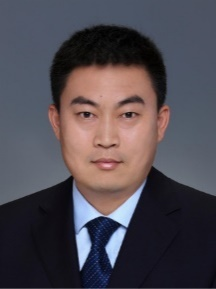 Prof. Yingxiang Liu
Harbin Institute of Technology, China
Recent Progress of Piezoelectric Actuators and Piezoelectric Robots
Abstract: The piezoelectric actuators have attracted a lot of attentions by their merits of high resolution, quick response, simple structure, small size and high power-weight ratio, which make them good candidates for fields of high-precision platforms, cell manipulations, optical equipment, ultra-precision machining and robots. Our recent research about the piezoelectric actuators focus on three main issues: how to achieve high performance macro-micro-nano cross-scale motion, how to expand the degrees of freedom of the actuation, and how to design different configurations of piezoelectric actuators. The solutions to these three problems will be discussed. Furthermore, the concept of piezoelectric robot is proposed, which is a new type of robots actuated by piezoelectric materials directly, and they inherit the merits of piezoelectric actuators, which make them good candidates for fields of cell manipulations, optical equipment, and so on. Some of our recent works of piezoelectric robots for cross-scale and multi-DOF locomotion and manipulations will be discussed.
Biography: Prof. Yingxiang Liu was born in Hebei Province, China, in 1982. He received his B.E. degree in mechanical engineering, M.E. and Ph.D. degrees in mechatronics engineering from the School of Mechatronics Engineering at Harbin Institute of Technology, China, in 2005, 2007 and 2011, respectively. He joined the School of Mechatronics Engineering at Harbin Institute of Technology in 2011, where he has been a professor since December 2013; he is a member of State Key Laboratory of Robotics and System, and he is also the director of the Lab of Advanced Actuation Technologies. He was a Visiting Scholar at Mechanical Engineering Department, University of California, Berkeley, from August 2013 to August 2014. His research interests include piezoelectric actuators, piezoelectric robots, ultrasonic motors, ultrasonic transducers, micro-nano manipulations, piezoelectric micro jets, vibration control, fish robots, soft robots, micro robots and artificial muscles. He has published two monographs and over 300 papers, over 280 papers have been published on international journals (NC, AFM, AS, IEEE TRO, IEEE TIE, ENGINEERING, CBS, RESEARCH, DEVICE, IEEE TMECH, MSSP, IJMS, etc). He has applied nearly 200 invention patents, over 130 patents have been granted. He has served as an Associate Editor of IEEE Transactions on Industrial Electronics, an Associate Editor of IEEE Transactions on Robotics, an Associate Editor of Journal of Field Robotics, an Associate Editor of IEEE Access, an Editorial Board Member of Advanced Robotics Research, an Editorial Board Member of SmartBot and an Editorial Board Member of Materials. Email: liuyingxiang868@hit.edu.cn
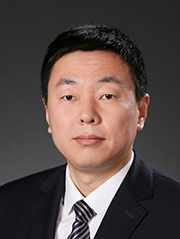 Dr. Fugui Xie
Tsinghua University, China
Mobile Five-Axis Parallel Machining Robot: Paradigm Exploration and Practice in In-Situ Manufacturing
Abstract: To address the challenges of efficient and high-quality machining of large, complex components in high-end manufacturing, a research direction of using small mobile parallel robots to machine large components has been explored and developed. A new paradigm of in-situ machining with mobile five-axis parallel robots was proposed, and a series of new robotic machining equipment was designed and developed. These technologies and equipment have been applied to the manufacturing of large, complex components in key fields, bringing about a transformative change to manufacturing paradigm. Such robotic, portable, and miniaturized manufacturing technologies and equipment have broad application prospects in aviation, aerospace, marine engineering, aero-engines and gas turbines, shield tunneling, and new energy vehicles, and are expected to provide new ideas for the high-quality development of high-end manufacturing equipment.
Biography: Dr. Fugui Xie is currently working as a tenured associate professor and doctoral supervisor with the Department of Mechanical Engineering at Tsinghua University. He is a recipient of the National Science Fund for Distinguished Young Scholars, a Youth Beijing Scholar and an Alexander von Humboldt (AvH) Research Fellow. His research interests include robotics and mechanisms, as well as robotic-enabled intelligent manufacturing equipment. He has led more than ten national projects, including projects under the National Key R&D Program and the NSFC. He has authored and co-authored 2 monographs and more than 80 SCI-indexed papers, and has been granted 5 U.S. invention patents and more than 90 Chinese invention patents. His research achievements were selected for the "World 10 Scientific and Technological Developments in Intelligent Manufacturing in 2022". He has received the First Prize of the Beijing Science and Technology Invention Award, the First Prize of the Machinery Industry Science and Technology Invention Awards, and etc. Currently, he serves as Vice Chairman of the Technical Committee on Tri-Co Robots of the Chinese Association of Automation (CAA), Associate Editor of ASME JMR, and an editorial board member of the Chinese Journal of Mechanical Engineering, and etc.
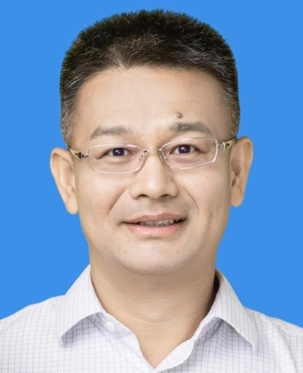 Prof. Chenglong Fu
Southern University of Science and Technology, China
RActive Physical Human-Robot Interaction
Abstract: Robots that collaborate with humans through physical interaction represent a transformative technology for enhancing human well-being, with the potential to restore limb function, augment operational capabilities, and serve public health. A common characteristic of such robots is that the robot and the human form a single body with two control brains, requiring collaborative efforts to accomplish tasks. Three challenges remain: difficulty in scene understanding, difficulty in human–robot coordination, and difficulty in adapting to diverse populations. To address these challenges, this talk focuses on the scientific question of “the coordination principles and adaptation mechanisms of an integrated human–robot body with dual brains” and systematically presents the research approach and achievements of the speaker’s team in robots for proactive physical human–robot interaction, characterized by “proactive understanding, proactive coordination, and proactive adaptation,” as well as their applications in limb restoration, load-bearing augmentation, and medical rehabilitation.
Biography: Prof. Chenglong Fu obtained his Ph.D. from Tsinghua University, in 2007. He was an Assistant Professor and subsequently as an Associate Professor in Tsinghua University, Beijing, China. He was a Visiting Scholar in the University of Michigan, USA. He is currently a Professor and Head of the Department of Mechanical and Energy Engineering, Southern University of Science and Technology, Shenzhen, China. He is the Director of the Guangdong Provincial Key Laboratory of Human-Augmentation and Rehabilitation Robotics. His research interests include powered prostheses, exoskeletons, and physical human–robot interaction. He has published more than 170 papers (including more than 100 journal papers in venues such as IJRR, TRO, TMECH, MMT, and National Science Review) and holds more than 50 granted patents. He is currently an Associate Editor of Robotica, IEEE Transactions on Automation Science and Engineering, and Intelligent Translational Medicine. He received the First Prize of the Shenzhen Science and Technology Progress Award, the First Prize of the Science and Technology Progress Award of the Chinese Association of Automation, and the First Prize for Teaching Achievements in Guangdong Province.
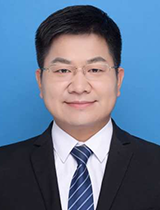 Prof. Yang Jixiang
Huazhong University of Science and Technology, China
Form Accuracy and Surface Quality Control in Robotic Adaptive Compliant Grinding of Parts with Complex Curved Surfaces
Abstract: The force-velocity planning and control accuracy in robotic flexible grinding of complex curved parts directly influence the material removal precision. This study integrates a material removal model for surface grinding and considers both robot dynamics and the servo characteristics of the force-controlled actuator. It proposes a conformal "force-velocity" adaptive optimization method for robotic flexible grinding, achieving optimal processing efficiency under hybrid constraints of material removal accuracy and electromechanical servo response capability. A series-elastic-element-based rigid-flexible coupled force-controlled actuator was developed, effectively suppressing force overshoot and improving grinding force control precision. To address the degradation of force control accuracy when grinding weak/variable-stiffness parts, an electromagnetically driven variable-stiffness force-controlled actuator was optimally designed to adaptively match contact stiffness, solving the problem of constrained material removal accuracy and surface quality caused by force control degradation during the grinding of long-overhang and variable-contact-stiffness parts. Experimental results show that the proposed method significantly improves profile accuracy, surface quality, and processing efficiency in grinding complex curved parts.
Biography: Jixiang Yang is a Professor and Doctoral Supervisor at the School of Mechanical Science and Engineering, Huazhong University of Science and Technology. He has presided over the Excellent Young Scientists Fund of the National Natural Science Foundation of China, the Key Program of the Joint Fund of the National Natural Science Foundation of China, the Young Scientists Project of the National Key R&D Program, and other projects. He is the recipient of the Xiong Youlun Zhihu Excellent Young Scholar Award, and was selected as an Elsevier Highly Cited Chinese Researcher for two consecutive years in 2024 and 2025. His research mainly focuses on the profile accuracy and surface quality control for robotic machining of complex‑surface parts. His research achievements have been applied to the robotic intelligent manufacturing of complex‑surface parts for multiple institutions. He has been granted more than 70 invention patents and registered 9 software copyrights. As the first or corresponding author, he has published 67 SCI papers, among which 52 are in Q1 journals.
Updating…